
You Y’all will be my witnesses.
WELCOME & INVITATION
We will help you share your faith — together as a community.
Our witness for Jesus is often stronger when it’s spoken and lived out as a family — the body of Christ.
-
This series highlights 4 key practices.
Each practice is deeply rooted in the life and ministry of Jesus.
These practices move the gospel deeper into our communal life. They also provide a magnetic, life-changing witness to the world around us.


LET’S REMEMBER A KEY TERM
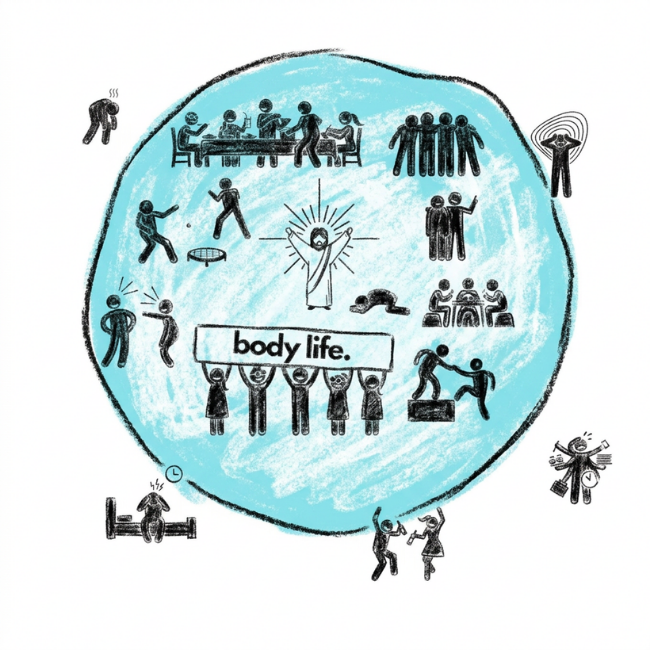
BODY LIFE WITNESS
“BODY LIFE WITNESS is happening whenever someone who is not a Christian encounters the gospel as it is spoken and lived out in the communal life of a group of Christians.”
OVERVIEW
Watch - Madison and Chandler (Welcome) 2 min
Discuss - Sawubona 5min
Read and Reflect - The Bible’s Welcome and Invitation Stories 2 min
Pray and Connect - Imaginative Prayer Experience (Luke 19:1-10) 15 min
Workshop - Sharpening your welcoming skills 7-10 min
Today’s Practice
Welcome & Invitation
▼ Watch together (1 min)
Madison and Chandler
Madison and Chandler are college students in Boston with roots in Texas, Arkansas, and Germany. They will get us started at the beginning of each practice we are learning together.

Sawubona!
— a Zulu Greeting
▼ Read
translation: “I see you!”
More than words of politeness, sawubona carries the importance of recognizing the worth and dignity of each person.
It says, “I see the whole of you—your experiences, your passions, your pain, your strengths and weaknesses, and your future. You are valuable to me.”
▼ Discuss as a group (5 min)
Think about your own life. Share an experience where you felt seen and welcomed by another person or group of people. How did that feel?
The Bible is full of welcome and invitation stories.
▼ Read this section aloud.
There once was a father who ran towards his son, the one who squandered the family inheritance. . .

The Prodigal Son
Luke 15:11-32

High up in the sycamore tree sat a short and greedy man. He had no idea who would come into his home that day. . .
Jesus and Zacchaeus
Luke 19:1-10
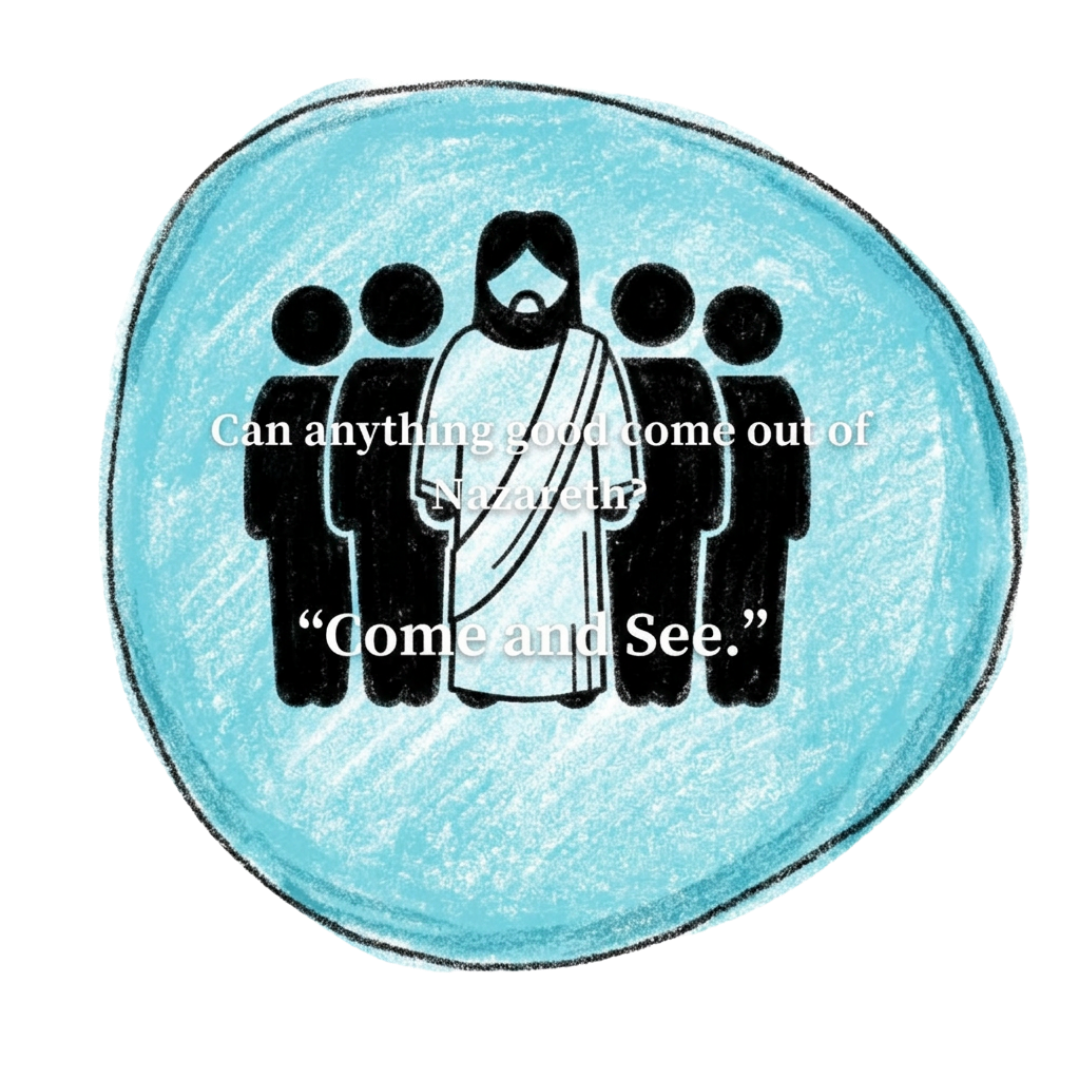
There he was— the one called Lamb of God. John the Baptizer said he wasn’t even worthy to untie the strap of his sandal. But people gathered around him with curiosity and questions. Jesus, the Lamb of God, responded with an invitation. “Come and you will see.”
“Come and see” soon echoed off the lips of those first followers.
Jesus and the first disciples
John 1:25-51
▼ Stop here and read.
Let’s now do a deeper dive into one of these stories of welcome and invitation.
▼ Read and take 15 mins on this section
An Imaginative Prayer Experience
Jesus and Zacchaeus Luke 19:1-10
Imaginative prayer is a method of prayer in which you imagine yourself as present in a Gospel scene, stepping into the story and encountering Jesus there.
▼Directions
For each reading below (first, second, and third) slowly read the passage aloud. Between each reading pause for reflection and discussion. Rotate who is going to be the reader each time.
With each reading, imagine yourself as one of the people in this story. Imagine everything that happens through their perspective. Tap into all of your senses and take note of the sights, sounds, thoughts, and emotions.

Jesus and Zacchaeus
Luke 19:1-10
▼Read together
Context
As a tax collector, Zacchaeus worked for Rome, the oppressor of his fellow Israelites. He extorted his own people for a living, using the power of Rome to line his pockets.
He would have been a despised person in his community and considered an outcast.
And yet . . . Jesus wants to have dinner with him.
▼Begin the imaginative prayer experience.
First Reading: Setting the scene
In this first reading, simply take in the scene. Observe to yourself:
Who is present?
Where does this story take place?
What other details can you see or imagine being present?
-
Zacchaeus the Tax Collector
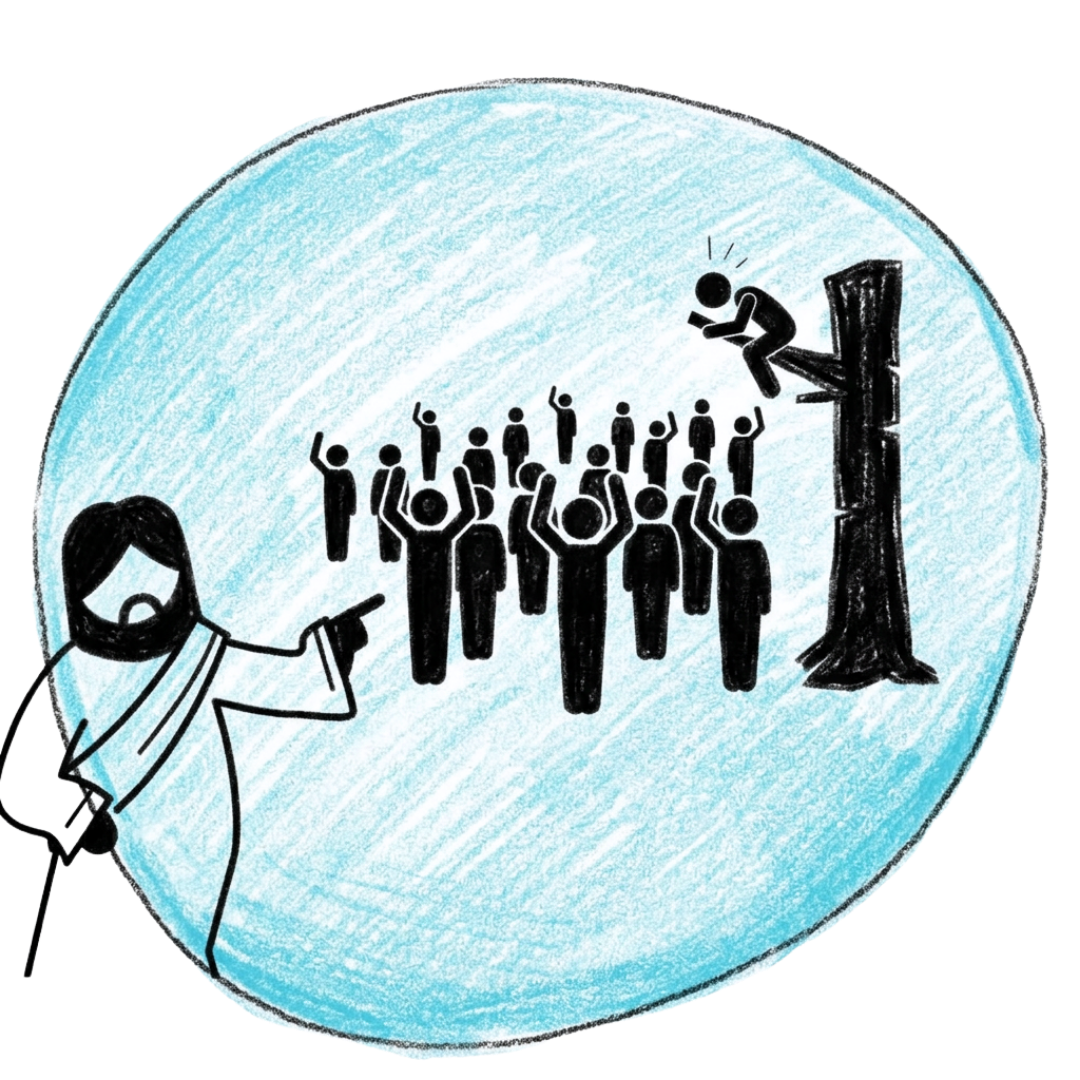
1 Jesus entered Jericho and was passing through. 2 A man was there by the name of Zacchaeus; he was a chief tax collector and was wealthy. 3 He wanted to see who Jesus was, but because he was short he could not see over the crowd. 4 So he ran ahead and climbed a sycamore-fig tree to see him, since Jesus was coming that way.
5 When Jesus reached the spot, he looked up and said to him, “Zacchaeus, come down immediately. I must stay at your house today.” 6 So he came down at once and welcomed him gladly.
7 All the people saw this and began to mutter, “He has gone to be the guest of a sinner.”
8 But Zacchaeus stood up and said to the Lord, “Look, Lord! Here and now I give half of my possessions to the poor, and if I have cheated anybody out of anything, I will pay back four times the amount.”
9 Jesus said to him, “Today salvation has come to this house, because this man, too, is a son of Abraham. 10 For the Son of Man came to seek and to save the lost.”
Discuss your observations.

Second Reading: From the view of the crowd
During this second reading, put yourself in the scene. Imagine you are one of the crowd members watching this encounter.
What do you observe? What are you thinking, feeling? What are you noticing about Zacchaeus? The crowd? Jesus?
Example: “I notice a person up in the tree!” “I hear the murmurs of the crowd as Jesus talks to him.” “I feel the glare of the crowd on Zacchaeus and Jesus.”
-
Zacchaeus the Tax Collector
1 Jesus entered Jericho and was passing through. 2 A man was there by the name of Zacchaeus; he was a chief tax collector and was wealthy. 3 He wanted to see who Jesus was, but because he was short he could not see over the crowd. 4 So he ran ahead and climbed a sycamore-fig tree to see him, since Jesus was coming that way.
5 When Jesus reached the spot, he looked up and said to him, “Zacchaeus, come down immediately. I must stay at your house today.” 6 So he came down at once and welcomed him gladly.
7 All the people saw this and began to mutter, “He has gone to be the guest of a sinner.”
8 But Zacchaeus stood up and said to the Lord, “Look, Lord! Here and now I give half of my possessions to the poor, and if I have cheated anybody out of anything, I will pay back four times the amount.”
9 Jesus said to him, “Today salvation has come to this house, because this man, too, is a son of Abraham. 10 For the Son of Man came to seek and to save the lost.”
Take a few minutes to briefly discuss your impressions related to the questions above.

In this third reading, imagine yourself as Zacchaeus in this story. Take in the atmosphere around you. What do you notice? What are you seeing, thinking, feeling?
Third Reading: From the view of Zacchaeus
-
Zacchaeus the Tax Collector
1 Jesus entered Jericho and was passing through. 2 A man was there by the name of Zacchaeus; he was a chief tax collector and was wealthy. 3 He wanted to see who Jesus was, but because he was short he could not see over the crowd. 4 So he ran ahead and climbed a sycamore-fig tree to see him, since Jesus was coming that way.
5 When Jesus reached the spot, he looked up and said to him, “Zacchaeus, come down immediately. I must stay at your house today.” 6 So he came down at once and welcomed him gladly.
7 All the people saw this and began to mutter, “He has gone to be the guest of a sinner.”
8 But Zacchaeus stood up and said to the Lord, “Look, Lord! Here and now I give half of my possessions to the poor, and if I have cheated anybody out of anything, I will pay back four times the amount.”
9 Jesus said to him, “Today salvation has come to this house, because this man, too, is a son of Abraham. 10 For the Son of Man came to seek and to save the lost.”
Take a few minutes to briefly discuss your impressions related to the questions above.
Discuss together
▼After the imaginative prayer experience, discuss these final questions as a group.
In what ways is this a story of welcome and invitation?
The story of Zacchaeus invites us to see the radical welcome of Jesus towards outsiders. Where have you seen that kind of welcome in your own Christian community? What has hindered that kind of welcome?
How does our understanding of our own brokenness and need for forgiveness effect our invitation and welcome of others?
Workshop
▼ Read and spend a final 7-10 mins on this section.
Embodying the Welcome and Invitation of Jesus
Jesus didn't simply notice Zacchaeus. He saw him, moved toward him, and invited him into relationship.
Who could experience something similar through your community this week?
1. SEE SOMEONE
Think of one person who isn't currently part of your Christian community. Who might appreciate being noticed, known, and included?
Share their name: ______________
2. INVITE THEM IN
What are you already doing with other followers of Christ that they could naturally be invited into?
Meals • Bible study • Cru • Game night • Workout • Study session • Sports
What are you inviting them into? __________________________
3. WELCOME WELL
If they come, don't leave their experience to chance.
What could you do to help them feel genuinely seen (remember Sawubona)?
Meet them when they arrive.
Introduce them by name.
Draw them into conversation.
Sit with them.
Follow up afterward.
4. DO IT
Tell at least one person in your group what you're going to do. Next time you meet, share what happened. Honestly, just text them now.
Need help with the invite? Check out: How to Make Meaningful Invitations.
REAL EXAMPLES
WHEN ENTIRE CRU MOVEMENTS EMBRACE WELCOME & INVITATION
-
A Cru movement in Southern California loves to wildly welcome students to its weekly meeting. As each person enters the lecture hall, the emcee and growing crowd enthusiastically call out their name. If they don’t know a new person’s name, the room erupts with a collective, “Welcome!”
-
One Cru movement created an “in-reach” team whose goal it was to meet and get to know every new person who came to a Cru event.
THE BIG IDEA
WELCOME AND INVITATION
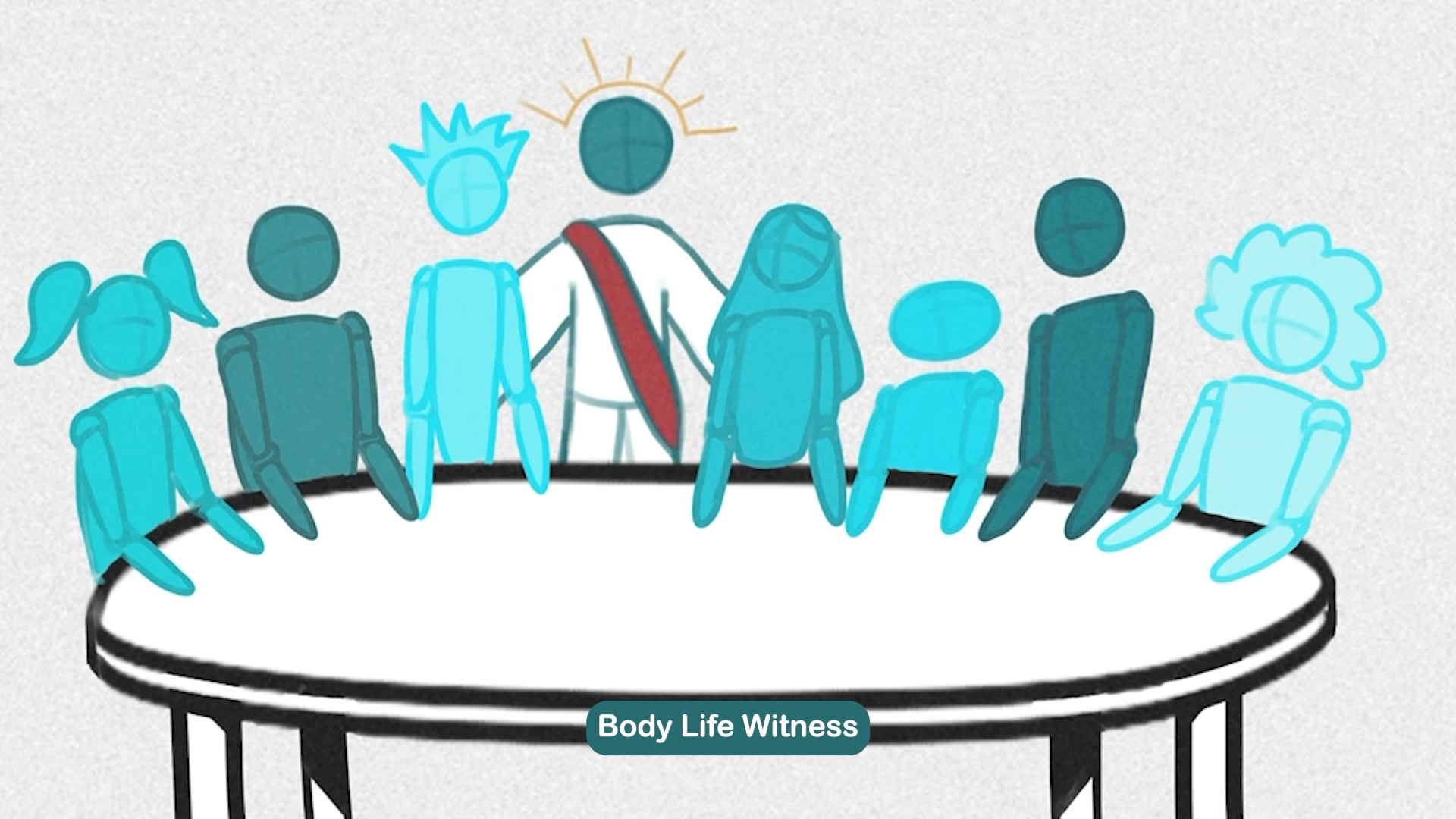
When the Body of Christ practices the welcome and invitation of Jesus, people encounter the God who longs for them to enter into his family.
Next time we meet
Why was Jesus always getting so close to people?
Jesus, the Word, became flesh and lived among us. He “closed the distance” between sinful humans and a holy God.
The Bible tells us that when Jesus closed the distance, he came full of grace and truth. What does this mean for us and the way we treat outsiders?
Next time, we will dive into the practice of Closing the Distance.